What actually drives the cost of a concrete driveway in Palmdale
A flat per-square-foot number you find online is misleading — here's what really moves the price up or down on a real job.
Search "concrete driveway cost" and you'll find a dozen sites throwing out a flat per-square-foot number. We're not going to do that here — a real number depends on what's actually happening on your property, and quoting blind off a generic average is how homeowners end up with a surprise change order once the crew starts digging.
Soil and base conditions
This is the biggest swing factor, and it's specific to where you live in the Antelope Valley. A lot on sandy, well-draining decomposed granite needs less base correction than one sitting on denser, expansive clay — and some hillside lots around Rancho Vista and Anaverde have both within the same driveway footprint. More excavation and more base material means more cost, but it's the difference between a driveway that lasts and one that doesn't.
Finish choice
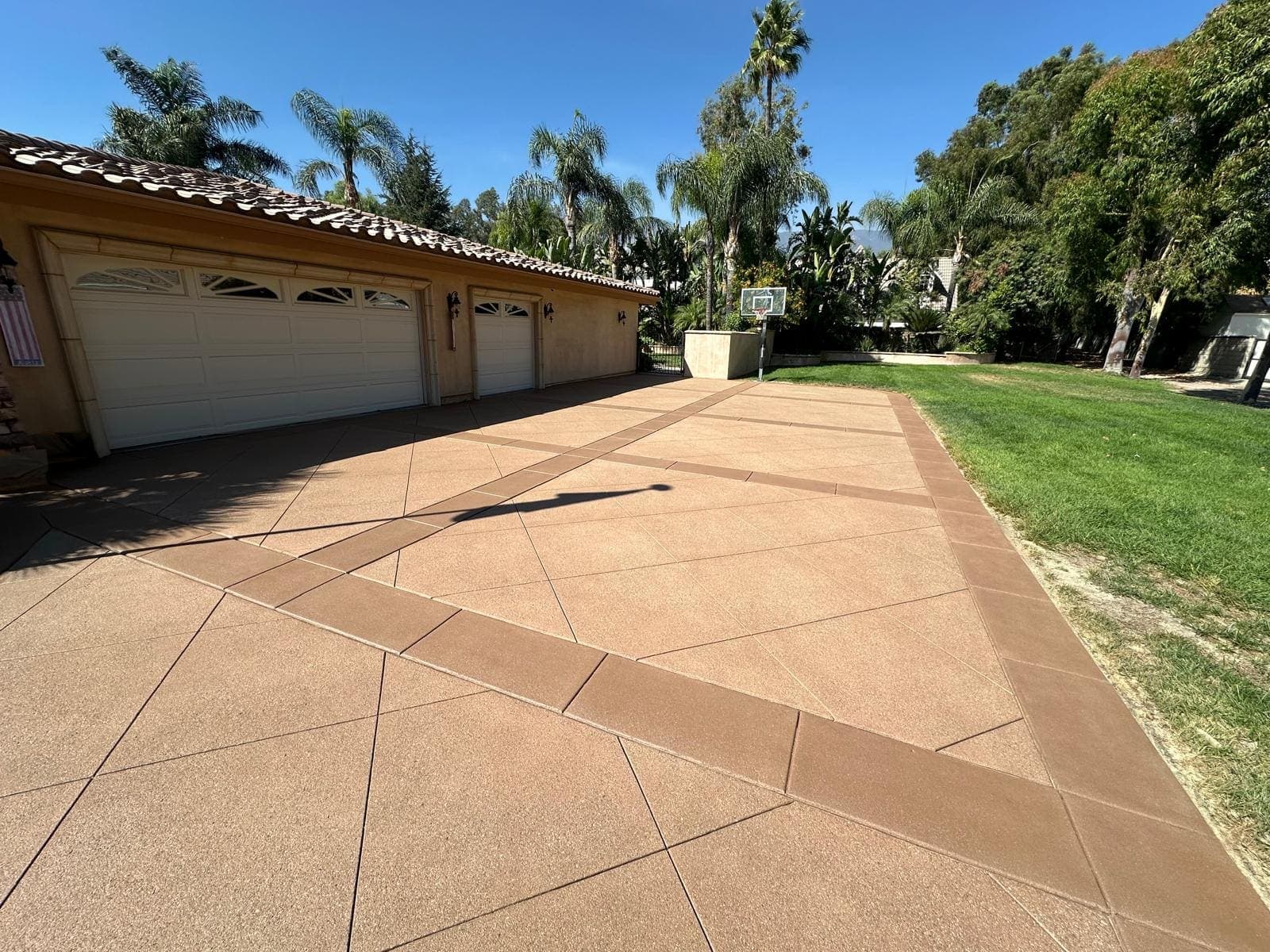
A standard broom finish is the most affordable option. Integral color (mixed into the concrete itself, not sprayed on top) and stamped or tooled borders cost more in material and labor, but they don't fade or wear off the way a surface stain eventually does.
Thickness and reinforcement for actual use
A driveway that only ever sees two passenger cars can run a lighter reinforcement spec than one that regularly handles a work truck, RV, or trailer. Telling your contractor honestly how the driveway will actually be used is what lets them size the reinforcement correctly instead of over- or under-building it.
The honest answer
Anyone quoting a driveway over the phone without seeing the site is guessing. We walk the property, look at the existing grade and soil, talk through finish options, and give you a real written number — not a ballpark that changes once we start digging.