Does artificial turf actually make sense in the Antelope Valley?
High-desert heat, low rainfall, and local water rules change the math on turf vs. real grass — here's how to think about it honestly.
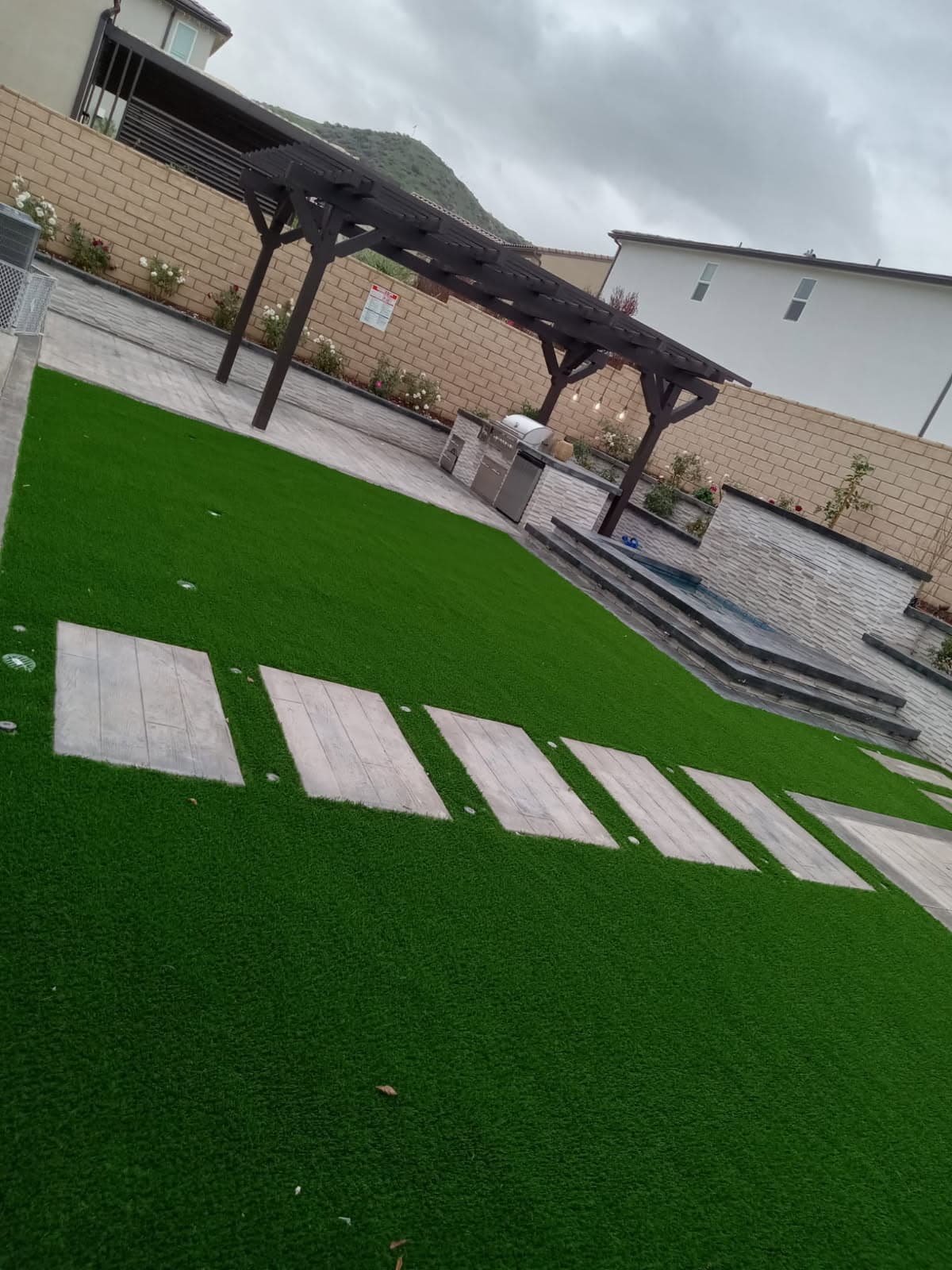
Every homeowner in the Antelope Valley eventually asks the same question after a second or third summer of trying to keep a lawn green: is real grass even worth it out here? The honest answer is that our climate makes it a genuinely harder sell than it is in a lot of other parts of California — hot, dry summers, low annual rainfall, and watering-day restrictions from local water providers during drought years all stack the deck against turfgrass.
How much water does a real lawn actually use out here?
Grass loses water fast in low humidity and high heat, which describes most of a Palmdale or Lancaster summer. That's why a lawn that looks fine in April can be struggling by July without a serious watering schedule — and why local water agencies have leaned on watering-day restrictions during drought periods. None of that is a knock on real grass; it's just the reality of the climate we're building in.
Where artificial turf earns its cost back
Turf costs more upfront than seed or sod, and we'll tell you that straight instead of glossing over it. What it gets you back over time is no reseeding after a rough summer, no mowing or fertilizing, and a lawn that doesn't depend on hitting a watering schedule perfectly. Whether that trade actually pencils out for your household depends on your specific yard and how you use it — that's a conversation worth having on-site, not a number we'll throw out sight unseen.
What actually determines the outcome
Whichever way you go, the install underneath matters more than the product on top. A properly compacted, well-drained base is what keeps turf from developing low spots and keeps real grass from drowning in a low corner of the yard after a summer monsoon downpour. That's the part worth getting right regardless of which direction you land on.